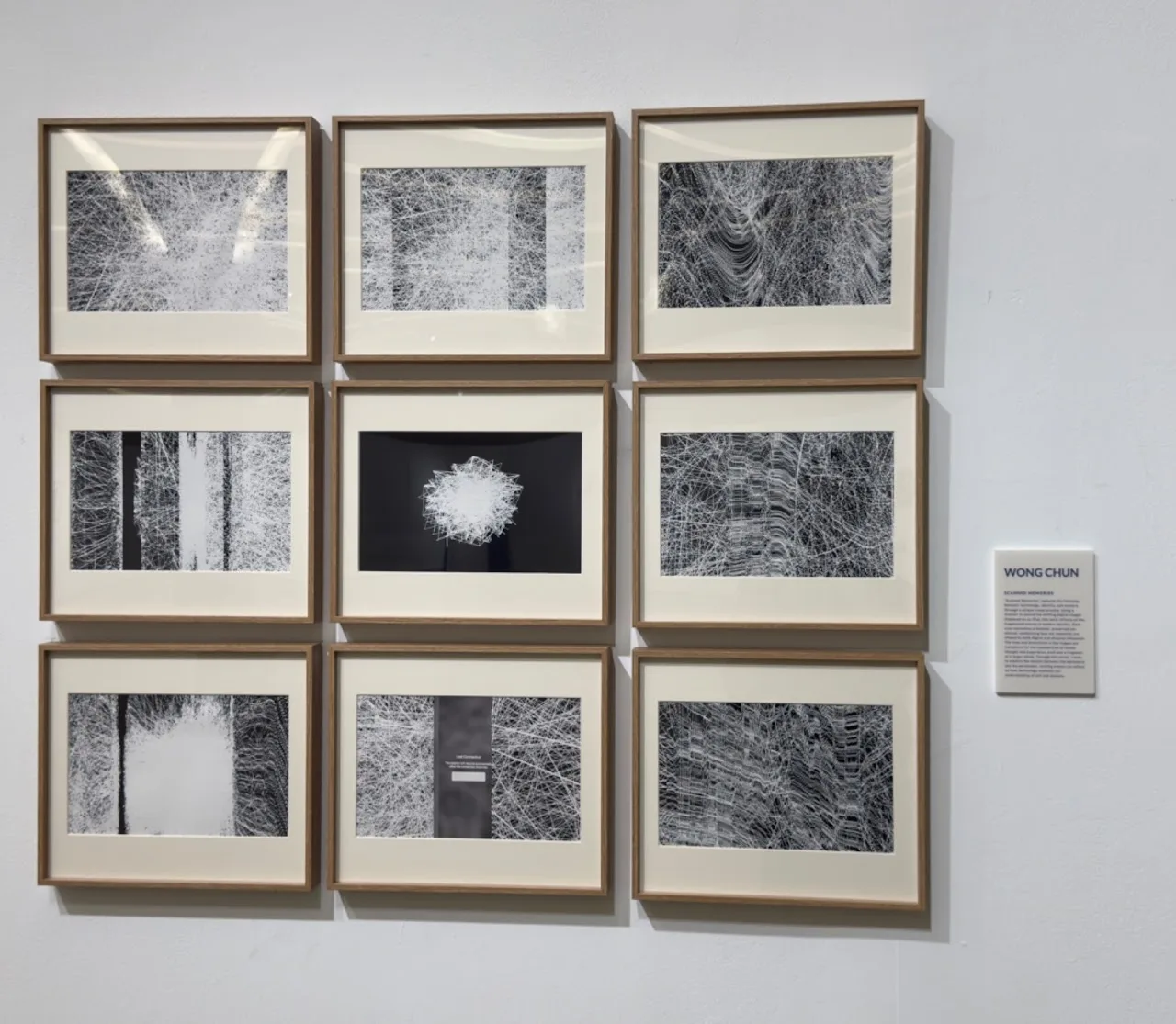
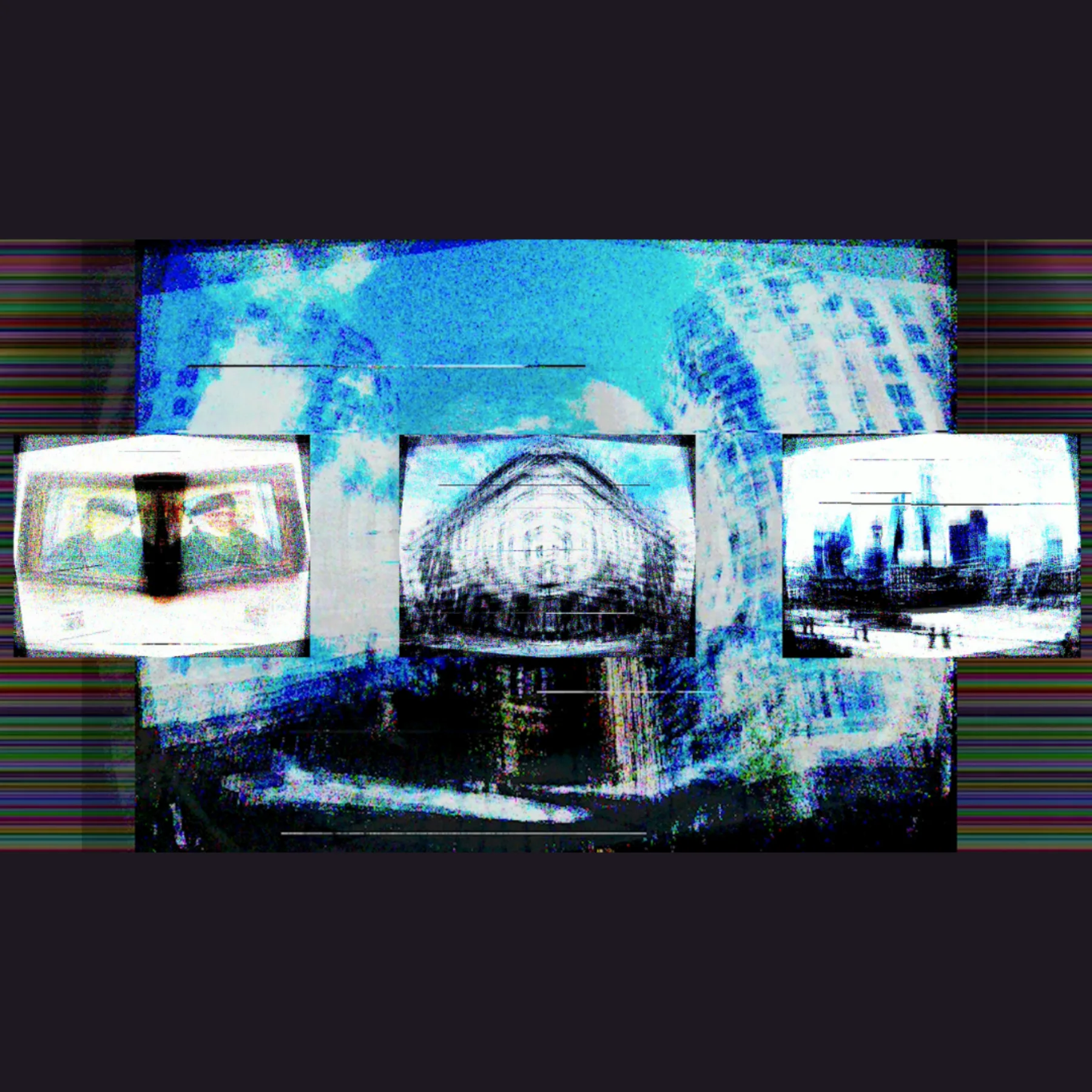
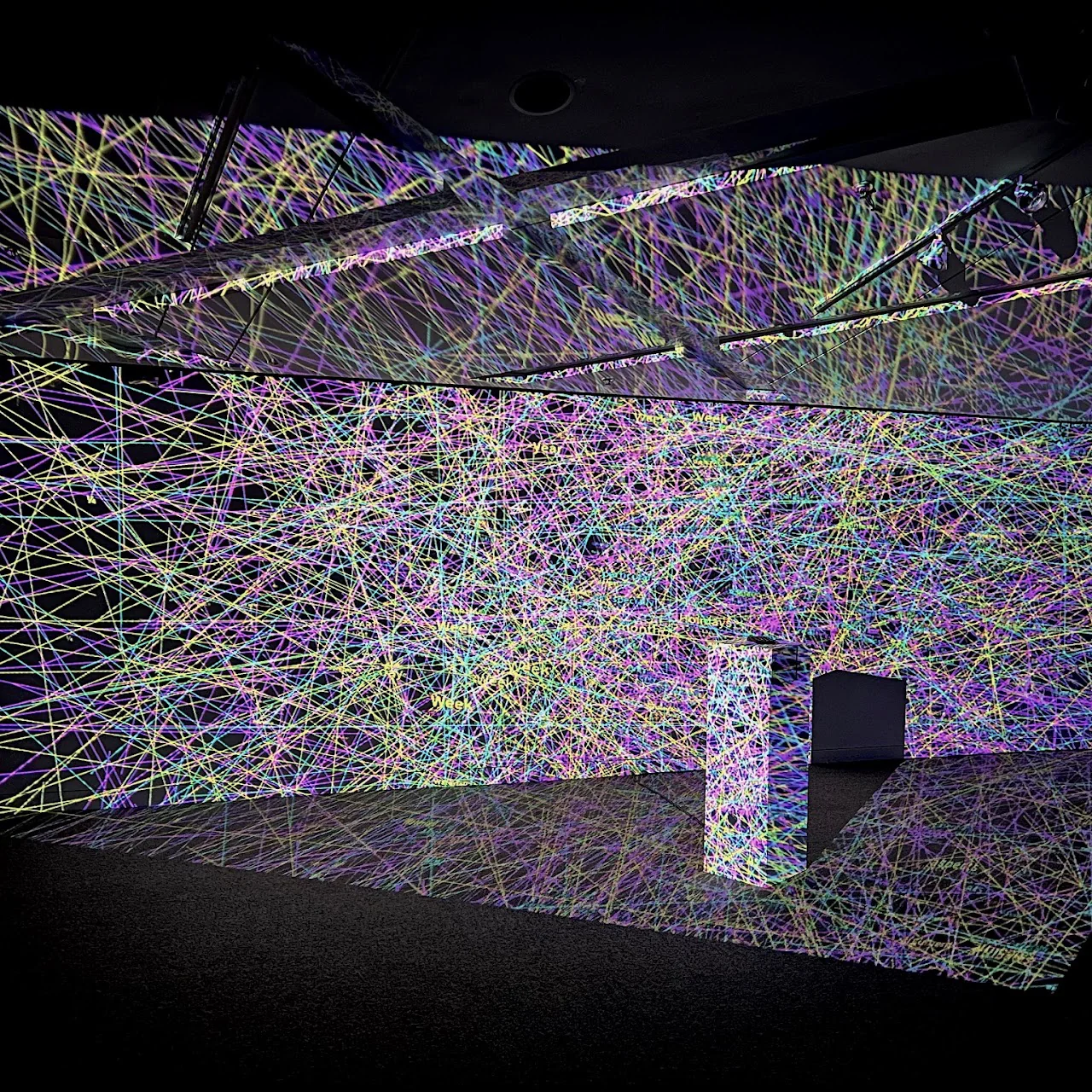
Image archive
Six hundred photographs were selected from the artist’s London study-trip archive.
Moving image · 2024
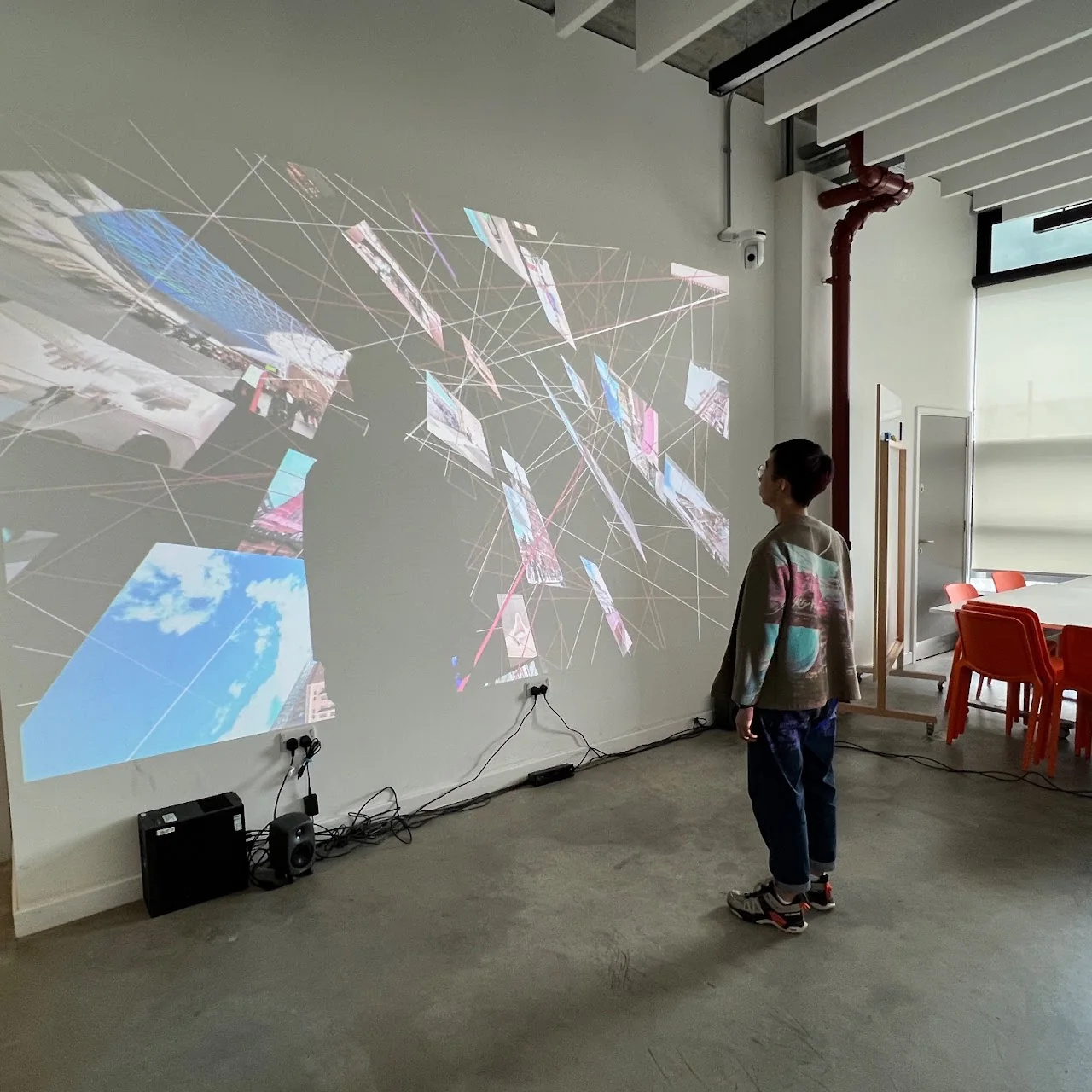
A five-minute moving-image work transforming 600 photographs from a London study trip into an AI-generated visual diary of travel, learning and cultural encounter.
Rather than presenting the trip chronologically, MemoryGrid uses computational analysis to reveal visual relationships across landmarks, everyday scenes and fleeting observations. Memory becomes a network: associative, layered and continually in motion.
A closer look / Viewing notes
Watch for connections rather than a route. Let one image lead to another through visual resemblance, and notice how that changes your sense of the journey.
Explore the documentationThe London study-trip photographs become a collection that can be read across images. Machine vision and clustering offer another structure for the diary, alongside the order in which the photographs were taken.
As a moving-image work, MemoryGrid unfolds through duration. Watch how a sequence changes the meaning of an individual image: what precedes and follows it can be as important as what it depicts.
Think of the grid as a map of associations. It suggests a way to approach memory through connections among observations, rather than as a complete reconstruction of a past event.
Project framework
Process and approach
Six hundred photographs were selected from the artist’s London study-trip archive.
Recognition, clustering and generative techniques reveal visual relationships across the collection.
Images flow as an associative narrative, mirroring the way recollections connect across time.
Moving image
Visual archive / 02 images
Explore the artwork, its details and its context. Select any image to view it in full.
Continue exploring